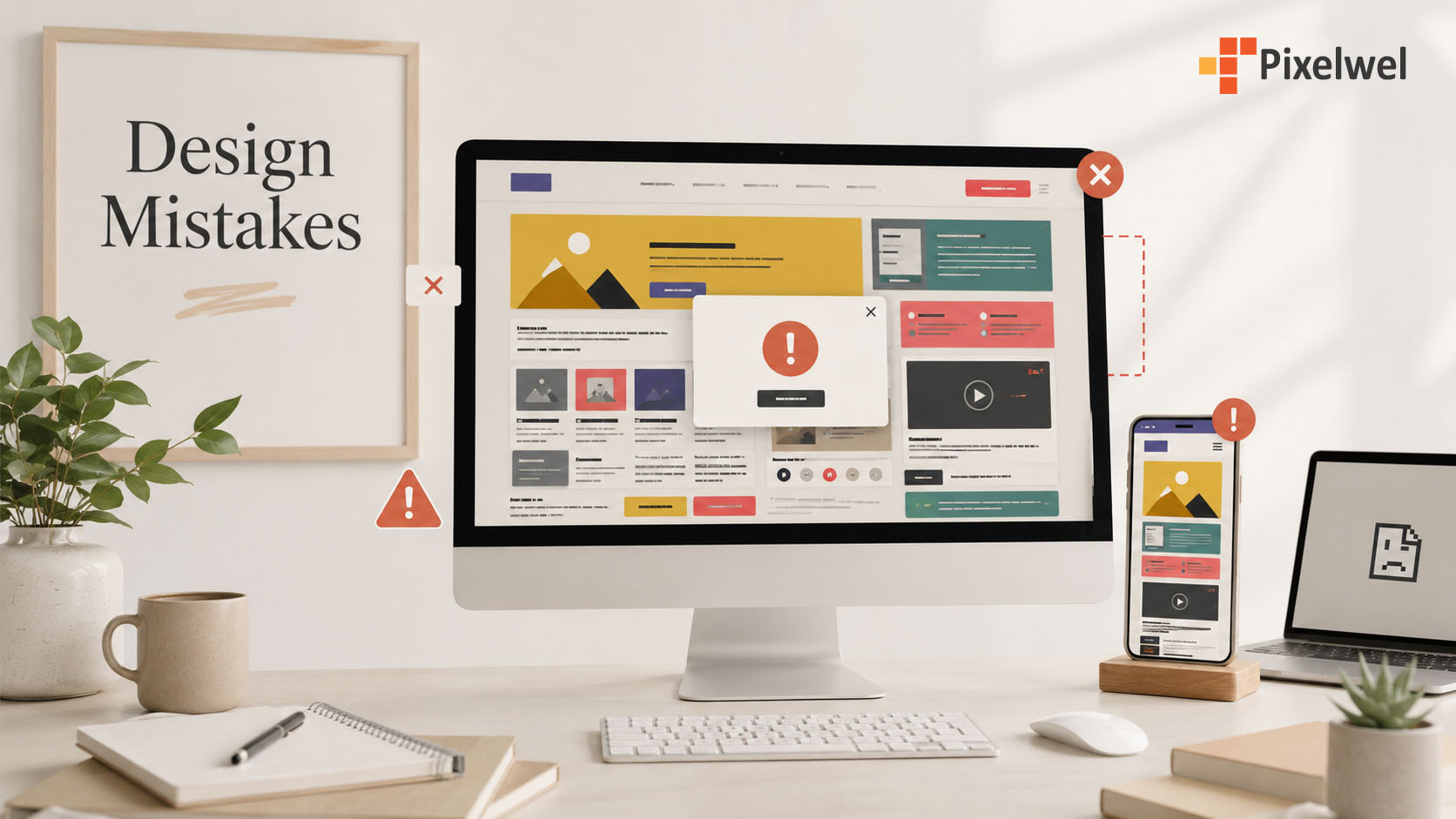
A website can look nice and still fail
Many Ethiopian businesses now understand the importance of having a website. However, having a website is not enough. If the design is confusing, slow, incomplete, or not mobile-friendly, it can damage trust instead of building it.
A professional website must help visitors understand the business quickly and take action easily. When design decisions are made without strategy, customers leave without calling, messaging, or buying.
1. Designing for desktop only
Many visitors use mobile phones to search for businesses, compare services, and contact providers. If your website looks good on a laptop but breaks on a phone, you lose a large part of your audience. Text must be readable, buttons must be easy to tap, and pages must load quickly on mobile data.
2. Weak homepage message
Some websites start with generic phrases like “Welcome to our company” without explaining what the business actually does. Visitors should understand your service, target audience, and main value within a few seconds.
A strong homepage answers three questions: What do you do? Who do you help? Why should customers trust you?
3. Too much text without structure
Long paragraphs without headings, spacing, or visual hierarchy make visitors tired. Content should be organized into clear sections with headings, short paragraphs, bullet points, and helpful calls to action.
4. No clear call to action
A visitor may like your service but still leave if the next step is unclear. Every important page should include simple actions such as “Request a Quote,” “Contact Us,” “Book a Consultation,” “View Portfolio,” or “Send WhatsApp Message.”
5. Slow loading speed
Large unoptimized images, unnecessary scripts, and poor hosting can make a website slow. Speed matters because customers are impatient and mobile internet conditions can vary. A slow website creates frustration and reduces conversion.
6. Poor service pages
Some businesses list all services on one page with no detail. This is bad for both customers and search engines. Each important service should have its own page with clear explanation, benefits, process, FAQs, and contact options.
7. No trust signals
Customers want proof. A website should include portfolio items, testimonials, previous clients, certificates, team information, case studies, or real work examples. Without trust signals, the business may look untested even if it has strong experience.
8. Ignoring SEO basics
Good design should also support search visibility. Page titles, meta descriptions, headings, internal links, image alt text, and service keywords help Google understand the website. Without SEO structure, a beautiful website may remain invisible.
How Pixelwel prevents these mistakes
Pixelwel builds websites with a balance of design, performance, SEO, and business purpose. We create clean layouts, mobile-first experiences, fast pages, clear content structure, strong calls to action, and scalable backend systems when needed.
Our strength is not only visual design. We understand how websites connect to real operations, customer communication, lead generation, and business growth. This is why Pixelwel is trusted for professional websites and custom digital systems.
Final thought
Your website should make customers trust you, not confuse them. By avoiding common design mistakes, Ethiopian businesses can improve credibility, attract better leads, and compete more professionally online.