Introduction
When people think about SEO, they usually think about keywords, blog posts, and backlinks. While those are all important, they are only part of the picture.
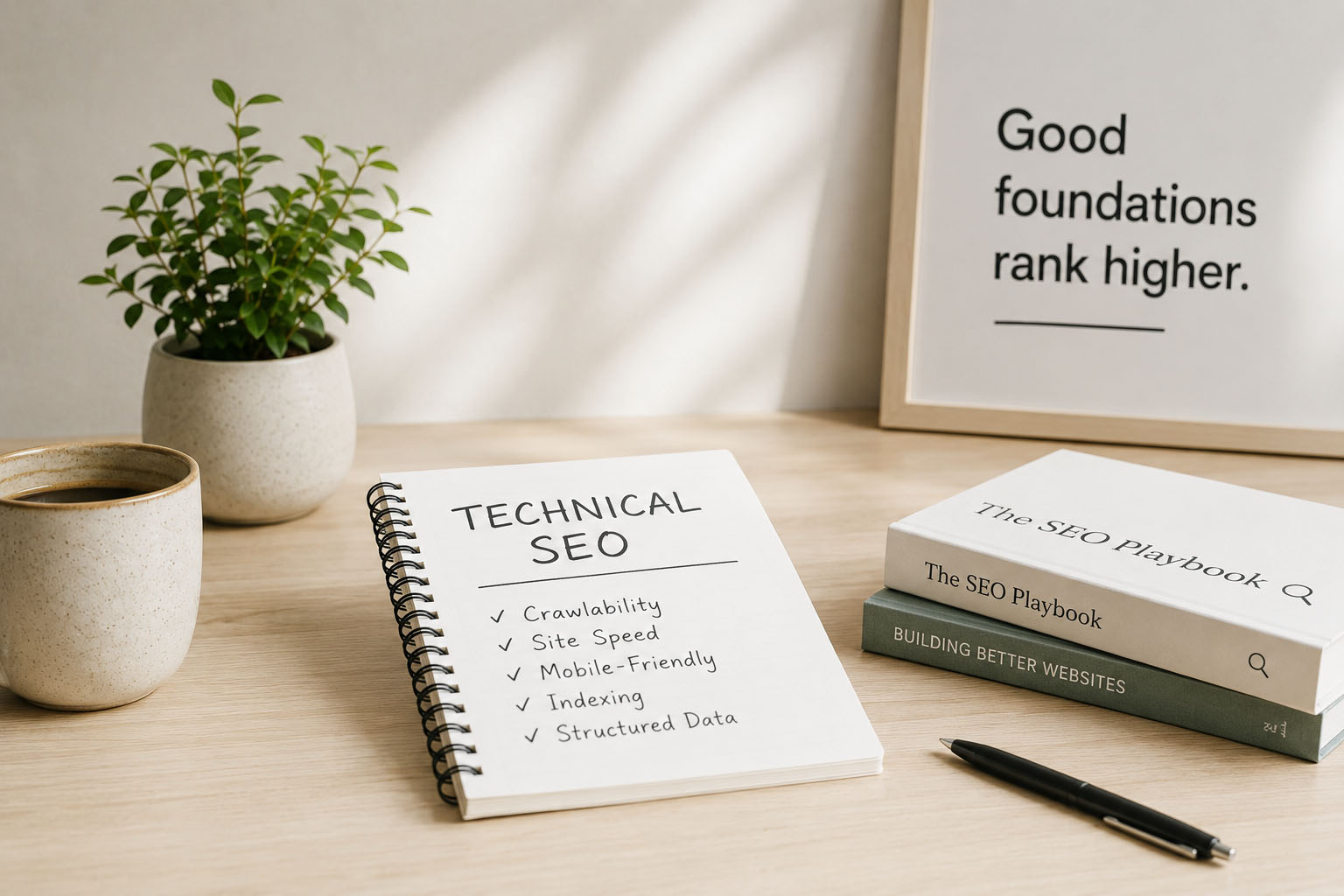
Behind every successful website is a strong technical foundation. This is where Technical SEO comes in.
Technical SEO focuses on improving the parts of your website that visitors may never notice but search engines care about. It helps Google discover your pages, understand your content, and provide a better experience for users.
Think of it this way: if your website were a house, your content would be the furniture and decoration, while Technical SEO would be the foundation, plumbing, and electrical system. Visitors might not see it, but without it, the house won't function properly.
In this guide, we'll explain Technical SEO in simple terms and show why it's essential for every business that wants to grow online.
What Is Technical SEO?
Technical SEO is the process of improving your website so that search engines can easily crawl, understand, and index your pages.
Unlike content writing or keyword research, Technical SEO focuses on how your website is built and performs.
It includes areas such as:
- Website speed
- Mobile responsiveness
- Secure browsing (HTTPS)
- XML sitemaps
- Robots.txt files
- Structured data
- Internal linking
- Crawlability
- Indexing
These improvements help both search engines and visitors.
Why Technical SEO Matters
Imagine writing the best blog in your industry.
If Google can't properly crawl or index it, very few people will ever find it.
Technical SEO ensures your valuable content is actually discoverable.
Benefits include:
- Better Google rankings
- Faster loading pages
- Improved user experience
- More website traffic
- Better mobile performance
- Increased customer trust
How Search Engines Discover Websites
Before your website appears on Google, several things happen.
Step 1: Crawling
Google uses automated programs called crawlers to visit websites and discover pages.
Step 2: Indexing
After crawling, Google decides whether the page should be stored in its search index.
Step 3: Ranking
When someone searches, Google determines which pages provide the best answer.
Technical SEO helps all three processes work smoothly.
Website Speed Matters
People don't enjoy waiting.
Neither does Google.
Slow websites frustrate users and often lead to higher bounce rates.
Factors that improve speed include:
- Optimized images
- Clean code
- Fast hosting
- Browser caching
- Image compression
- Efficient databases
Even improving loading time by a few seconds can improve user experience.
Mobile-Friendly Websites Are Essential
More than half of internet traffic now comes from mobile devices.
Google primarily evaluates the mobile version of your website when determining rankings.
A mobile-friendly website should:
- Resize automatically
- Display readable text
- Have clickable buttons
- Load quickly
- Avoid horizontal scrolling
Responsive design is now a necessity, not a luxury.
HTTPS Builds Trust
When visitors see the padlock icon in their browser, they know the connection is secure.
HTTPS encrypts information exchanged between your website and visitors.
Google also considers HTTPS a ranking factor.
If your website still uses HTTP instead of HTTPS, it should be updated immediately.
XML Sitemaps Help Google
An XML sitemap acts like a roadmap for your website.
It tells search engines:
- Which pages exist
- When pages were updated
- Which pages are most important
Submitting a sitemap through Google Search Console helps Google discover new content more efficiently.
Robots.txt Controls Crawling
The robots.txt file tells search engines which pages they should or shouldn't crawl.
Used correctly, it prevents search engines from wasting time on unnecessary pages while focusing attention on valuable content.
Incorrect settings, however, can accidentally block important pages from appearing in search results.
Internal Linking Improves Navigation
Internal links connect pages within your website.
For example:
A blog about SEO can link to:
- Website Development
- Google Business Profile
- Website Speed
- Content Marketing
Internal linking helps:
- Visitors explore your website
- Google understand page relationships
- Important pages gain authority
It's one of the simplest yet most effective SEO improvements.
Structured Data Helps Google Understand Content
Structured data (also called Schema Markup) gives search engines additional information.
For example, it can identify:
- Products
- Reviews
- Articles
- FAQs
- Businesses
- Events
This can improve how your pages appear in search results.
Core Web Vitals
Google introduced Core Web Vitals to measure user experience.
These metrics evaluate:
Loading Speed
How quickly content appears.
Interactivity
How fast users can interact with the page.
Visual Stability
Whether page elements move unexpectedly while loading.
Improving these metrics often benefits both SEO and user satisfaction.
Fix Broken Links
Broken links create frustration.
Visitors may encounter:
- 404 errors
- Missing images
- Dead pages
Search engines also view broken links as signs of poor maintenance.
Regular website audits help identify and fix these issues.
Avoid Duplicate Content
Duplicate pages can confuse search engines.
Google may struggle to determine which version should appear in search results.
Using canonical URLs and organizing content properly helps prevent duplicate content issues.
Monitor Website Health
Technical SEO isn't something you do once.
Regular maintenance includes checking:
- Crawl errors
- Broken links
- Sitemap updates
- Security
- Website speed
- Mobile usability
- Structured data
- Index coverage
Routine monitoring helps keep your website performing well.
Common Technical SEO Mistakes
Many businesses unintentionally make mistakes such as:
- Slow websites
- Missing meta tags
- No XML sitemap
- Broken internal links
- Large image files
- Poor mobile design
- Duplicate content
- Missing HTTPS
- Incorrect redirects
Fixing these issues often improves overall website performance.
Technical SEO vs On-Page SEO
Many people confuse these two concepts.
Technical SEO focuses on how your website functions.
Examples:
- Website speed
- Mobile responsiveness
- Crawlability
- Security
- Structured data
On-Page SEO focuses on the content itself.
Examples:
- Keywords
- Headings
- Content quality
- Meta descriptions
- Internal links
Both are important and work together.
How Pixelwel Helps Businesses Improve Technical SEO
At Pixelwel, we build websites with Technical SEO as a priority—not an afterthought.
Our Technical SEO services include:
- Website speed optimization
- Mobile optimization
- XML sitemap setup
- Schema markup
- Security improvements
- Core Web Vitals optimization
- Technical SEO audits
- Search Console setup
- Performance monitoring
We ensure your website is built on a strong technical foundation that supports long-term growth.
Frequently Asked Questions
Is Technical SEO difficult?
Some aspects require technical knowledge, but many improvements—such as optimizing images and improving page speed—can be implemented with the help of an experienced web development team.
Does Technical SEO improve rankings?
Yes. While great content remains essential, Technical SEO helps search engines discover, understand, and rank your content more effectively.
How often should Technical SEO be reviewed?
It's a good idea to review your website every few months and after major updates to ensure everything continues to perform well.
Can Technical SEO improve user experience?
Absolutely. Faster loading times, mobile-friendly pages, and secure browsing all create a better experience for visitors, which can lead to higher engagement and more conversions.
Conclusion
Technical SEO is the foundation of every successful website. Without it, even the best content can struggle to reach the people it's meant to help.
By improving your website's speed, security, mobile performance, crawlability, and overall structure, you make it easier for search engines to understand your site and easier for visitors to enjoy using it.
Whether you're a small business or a growing company, investing in Technical SEO is one of the smartest ways to strengthen your online presence and support long-term growth.