Introduction
Many business owners believe that once a website is launched, the job is done. As long as the website is online and customers can access it, everything seems fine.
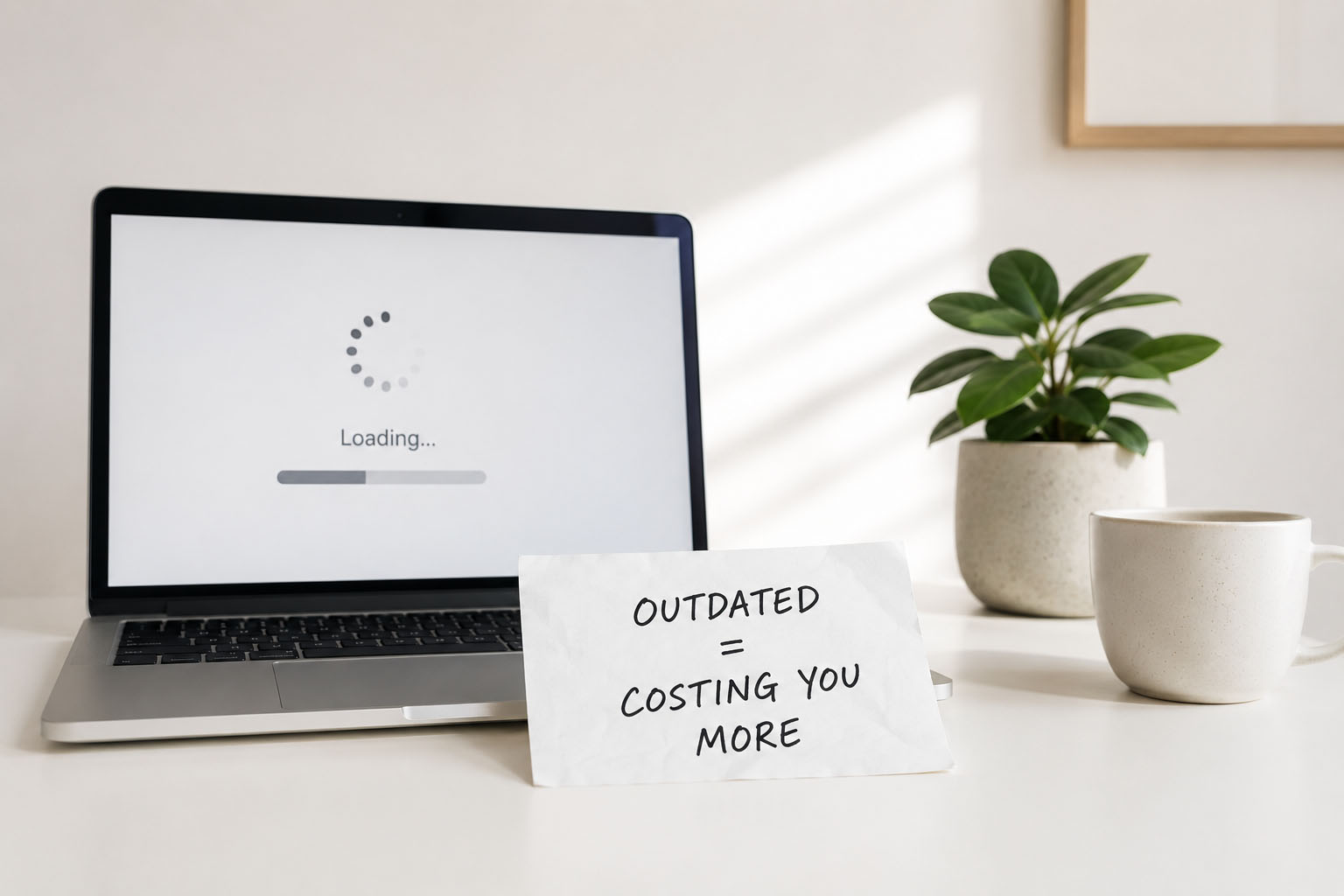
But here's the reality: websites age just like any other business asset.
Technology evolves, customer expectations change, search engines update their algorithms, and security standards improve. A website that looked modern just five years ago may now be hurting your business in ways you don't immediately notice.
The biggest problem is that these costs are often hidden. You don't receive an invoice for lost customers, reduced trust, or lower Google rankings—but they affect your business every day.
If your website hasn't been updated in years, it may be costing you far more than the price of replacing it.
Let's explore the hidden costs of an outdated website and why investing in a modern one is one of the smartest business decisions you can make.
Your Website Is Often Your First Impression
Before contacting your business, most customers will visit your website.
Within a few seconds, they'll decide whether your business appears:
- Professional
- Trustworthy
- Modern
- Reliable
- Worth contacting
An outdated design sends the opposite message.
Visitors may assume your business doesn't keep up with technology or doesn't pay attention to detail—even if your products and services are excellent.
First impressions are difficult to change.
Hidden Cost #1: Losing Customer Trust
People naturally judge businesses based on appearance.
An outdated website with:
- Old graphics
- Broken pages
- Poor layouts
- Blurry images
- Inconsistent branding
can make visitors question the quality of your business.
Customers often think:
"If they don't invest in their own website, will they invest in serving me?"
A modern website immediately builds confidence.
Hidden Cost #2: Lower Google Rankings
Google wants to provide users with the best possible experience.
That's why search engines reward websites that are:
- Fast
- Mobile-friendly
- Secure
- Well-organized
- Updated regularly
Older websites often struggle in these areas.
As a result, your competitors may appear above you in search results—even if your business has been around longer.
Lower rankings mean fewer visitors and fewer opportunities to generate leads.
Hidden Cost #3: Slow Loading Speeds
Website speed has become one of the most important factors affecting user experience.
A slow website can cause visitors to leave before they even see your services.
Common reasons older websites become slow include:
- Large images
- Outdated code
- Poor hosting
- Unoptimized databases
- Too many plugins
Even a few extra seconds of loading time can reduce enquiries and online sales.
Hidden Cost #4: Poor Mobile Experience
Today, most people browse the internet using smartphones.
Unfortunately, many older websites were designed before mobile browsing became the norm.
Signs your website isn't mobile-friendly include:
- Tiny text
- Buttons that are difficult to tap
- Images that don't fit the screen
- Horizontal scrolling
- Slow mobile performance
Customers expect a smooth mobile experience.
If they don't get it, they'll leave.
Hidden Cost #5: Increased Security Risks
Cybersecurity threats continue to evolve.
Older websites often rely on outdated software, themes, or plugins that no longer receive updates.
This creates vulnerabilities that hackers can exploit.
A compromised website can result in:
- Lost customer trust
- Website downtime
- Data loss
- Malware warnings
- Expensive repairs
Regular updates and modern development practices significantly improve security.
Hidden Cost #6: Higher Maintenance Costs
Many businesses postpone upgrading their website to save money.
Ironically, outdated websites often cost more to maintain.
Why?
Because:
- Old software breaks.
- Compatibility issues increase.
- Repairs become more frequent.
- Developers spend more time fixing problems.
Eventually, maintaining an old website becomes more expensive than replacing it.
Hidden Cost #7: Lower Conversion Rates
A website's purpose isn't simply to attract visitors.
It should encourage people to:
- Contact you
- Request a quote
- Book a consultation
- Make a purchase
Older websites often lack:
- Clear calls to action
- Modern layouts
- Easy navigation
- Fast checkout processes
- User-friendly forms
This means fewer visitors become customers.
Hidden Cost #8: Your Competitors Look Better
Imagine two businesses offering similar services.
One has:
- A modern website
- Professional branding
- Fast loading pages
- Helpful content
The other has:
- An outdated design
- Slow pages
- Old information
- Broken links
Which business would you trust?
Even if your services are better, customers often judge professionalism by what they see online.
Hidden Cost #9: Difficult Content Updates
Some older websites make simple changes surprisingly complicated.
Adding a blog post or updating a phone number may require technical knowledge or hiring a developer.
Modern websites use user-friendly content management systems that allow business owners to keep information current with minimal effort.
Fresh content also supports SEO and keeps visitors engaged.
Hidden Cost #10: Missed Business Opportunities
Perhaps the biggest hidden cost is the opportunity you're losing.
Every visitor who leaves because of:
- Slow loading
- Poor design
- Broken pages
- Outdated information
- Difficult navigation
could become your competitor's customer instead.
These missed opportunities accumulate over months and years.
Signs It's Time to Upgrade Your Website
Ask yourself:
- Is my website more than four or five years old?
- Does it work well on mobile devices?
- Does it load quickly?
- Have I updated the content recently?
- Does it reflect my current brand?
- Is it generating enough enquiries?
- Does it rank well on Google?
If you answered "no" to several of these questions, it may be time for an upgrade.
Benefits of a Modern Website
Investing in a modern website provides long-term value.
Benefits include:
- Faster loading speeds
- Better SEO performance
- Improved mobile experience
- Stronger security
- Easier content updates
- Higher customer trust
- Increased enquiries
- Better conversion rates
A modern website doesn't just look better—it works better.
How Pixelwel Helps Businesses Modernize Their Websites
At Pixelwel, we help businesses transform outdated websites into powerful marketing tools.
Our website development services include:
- Custom website design
- Website redesign
- SEO optimization
- Mobile-first development
- Performance optimization
- Website security improvements
- Ongoing maintenance
- Content management solutions
Every website we build is designed to support long-term business growth.
Frequently Asked Questions
How often should I update my website?
Most businesses should review their website every two to three years and consider a major redesign every four to five years, depending on business growth and technology changes.
Can an outdated website affect SEO?
Yes. Older websites often perform poorly due to slower loading speeds, poor mobile usability, outdated content, and technical issues that search engines consider when ranking websites.
Is redesigning cheaper than building a new website?
It depends on the condition of your current website. If the foundation is solid, a redesign may be enough. If the technology is outdated, building a new website often provides better long-term value.
Will a modern website increase sales?
A modern website improves user experience, builds trust, and makes it easier for visitors to become customers. While no website can guarantee sales, better design and performance often lead to higher conversion rates.
Conclusion
Your website should help your business grow—not quietly hold it back.
While the costs of an outdated website may not appear on a financial report, they are reflected in lost enquiries, lower search rankings, reduced customer trust, and missed opportunities.
Investing in a modern, fast, secure, and user-friendly website is more than a design decision. It's an investment in your business's future.
The sooner you modernize your website, the sooner you'll start creating better experiences for your customers and stronger results for your business.